


Matinee Meaning, Have you ever noticed the word “matinee” on a movie schedule or theater poster and wondered what it means?
You’re definitely not the only one. Whether you’re booking movie tickets, attending a stage performance, or looking at an event timetable, you’ll often see the word matinee used for shows that take place earlier in the day.
In this guide, you’ll discover:
- The meaning of matinee
- Where the word came from
- How it’s used in movies, theaters, and everyday English
- Real-life examples and common expressions
- Answers to frequently asked questions
🎟️ What Does Matinee Mean?
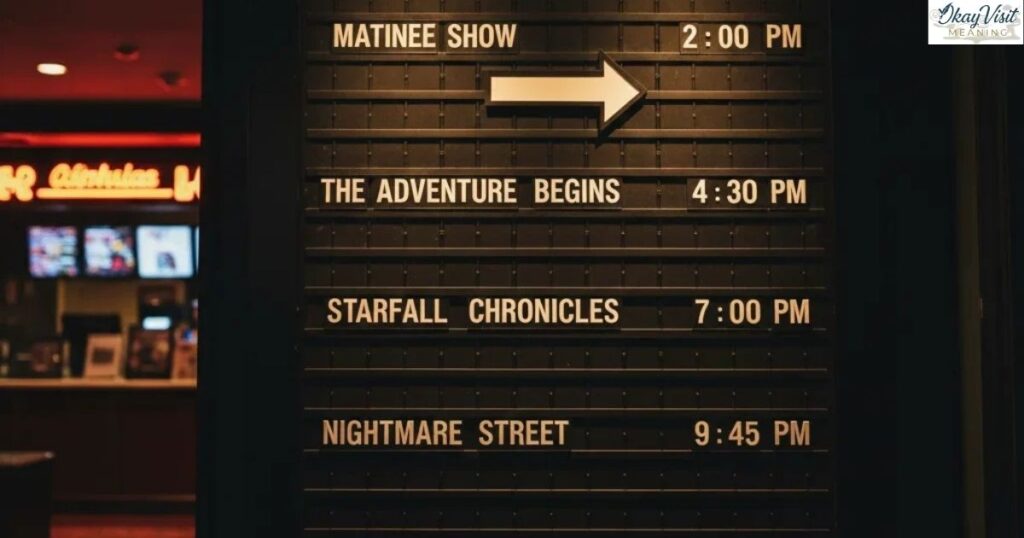
A matinee is a performance or entertainment event that takes place during the daytime, most often in the afternoon instead of the evening.
The term is commonly associated with movies, stage plays, musicals, concerts, and other live performances.
Example:
“We watched the matinee showing of the new Marvel film at 2:00 PM.”
Unlike internet slang or abbreviations, matinee is a standard English noun that has been used for many years in the entertainment world.
🕰️ Origin and Popularity
The word matinee comes from the French term “matinée,” which originally meant “morning.”
Matinee Meaning, As the word entered English, its meaning gradually shifted to describe performances held earlier in the day typically from late morning through the afternoon.
Quick Timeline
- 18th Century (France): Matinée referred to morning gatherings and social events.
- 19th Century (Britain & America): Theaters adopted the word for daytime performances.
- 20th–21st Century: Cinemas, concert halls, and theaters widely used “matinee” to distinguish afternoon shows from evening performances.
Today, matinee performances remain popular because they’re often more affordable, less crowded, and convenient for families and daytime audiences.
Connotative Meaning: What People Always Get Wrong
🎭 Matinee Meaning in Different Contexts
Matinee Meaning, Although the core meaning stays the same, matinee can have slightly different uses depending on the situation.
🍿 In Movies or Cinemas
In movie theaters, a matinee refers to an early screening, usually scheduled before 6:00 PM.
Example:
“Matinee tickets cost less than evening tickets.”
🎤 In Theatre or Concerts
For live entertainment, matinee describes a daytime performance, often held on weekends, holidays, or special occasions.
Example:
“The theater has a Sunday matinee that’s perfect for families.”
🏫 In Daily Speech or Writing
People sometimes use matinee in a figurative way to describe an earlier or smaller version of a larger event happening later.
Example:
“The afternoon gathering felt like a matinee before the main celebration that evening.”
| Context | Matinee Meaning | Example |
|---|---|---|
| Movies | Afternoon film screening | “The 3 PM matinee costs half the regular price.” |
| Theatre | Daytime stage performance | “Let’s watch the matinee before dinner.” |
| Everyday Use | Earlier version of an event | “It felt like a matinee before the festival started.” |
Mazel Tov Meaning: The Beautiful Tradition Behind It
💬 Examples of Matinee in Conversations
Example 1
Friend 1: “Want to see the new Pixar movie?”
Friend 2: “Sure! Let’s catch the 2 PM matinee since the tickets are cheaper.”
Example 2
“I enjoy matinee performances because they’re quieter, less crowded, and perfect for relaxing weekends.”
Example 3
“The matinee performance of The Lion King sold out within hours.”
Example 4 (Formal Usage)
“Due to overwhelming demand, an additional matinee performance has been scheduled for Saturday afternoon.”
Read More: What Does TYSM Mean? — Full Meaning, Usage & Examples 2026
🔄 Similar or Related Terms
These entertainment-related terms are often used alongside matinee.
| Term | Meaning |
|---|---|
| Premiere | The very first public showing of a movie or play. |
| Showtime | The scheduled time when a movie or performance begins. |
| Double Feature | Two films shown one after another during the same screening. |
| Evening Show | A performance that takes place later in the day, usually after 6 PM. |
These expressions frequently appear in movie listings, theater schedules, and entertainment advertisements.
🧭 How to Use “Matinee” Correctly
✅ Do:
- Use matinee when referring to performances held during the daytime.
- Say “matinee show” or “matinee performance” if you want to be more specific.
- Use the word in neutral or formal situations such as theaters, cinemas, and event promotions.
❌ Don’t:
- Assume a matinee always means a morning event it usually refers to the afternoon.
- Treat it as slang or an abbreviation because it’s a proper English word.
- Confuse matinee with premiere, which refers to the first public showing.
⚠️ Common Mistakes or Misinterpretations
One common misunderstanding is thinking a matinee is an early morning show.
Reality: Most matinee performances begin in the afternoon rather than the morning.
Another mistake is believing the word only applies to movies.
Reality: It can also describe plays, musicals, concerts, operas, and other daytime performances.
Some people also use matinee for any daytime event.
Reality: The term is generally reserved for entertainment performances rather than ordinary daytime activities.
❓ FAQ’s
What does “matinee” mean in movies?
In cinemas, a matinee is an afternoon movie screening, usually scheduled between 12 PM and 5 PM. Many theaters also offer reduced ticket prices for these showings.
Is a matinee only used for theater performances?
No. Although the word first became popular in live theater, it is now widely used for movies, concerts, musicals, operas, and other daytime entertainment events.
Why are matinee tickets usually cheaper?
Many theaters and cinemas lower matinee ticket prices to encourage more people to attend during quieter daytime hours.
What time does a matinee normally begin?
Most matinee performances start sometime between 12:00 PM and 4:00 PM, although schedules vary depending on the venue.
What is the opposite of a matinee?
The opposite of a matinee is generally an evening show or night performance, which takes place later in the day.
How do you pronounce “matinee”?
The word is commonly pronounced “MAT-uh-nay,” with the emphasis placed on the first syllable.
🌇 Conclusion
Matinee Meaning, A matinee is simply a daytime performance, most commonly an afternoon movie, theater show, concert, or other entertainment event. Although the word comes from French, it has become a familiar part of English and is widely used around the world.
Matinee performances continue to be popular because they’re often less expensive, more family-friendly, and scheduled at convenient daytime hours.
🎞️ Now that you understand the meaning of matinee, you’ll know exactly what to expect the next time you see a matinee show listed. Keep exploring our site for more easy-to-understand explanations of popular words, phrases, and entertainment terms.
