

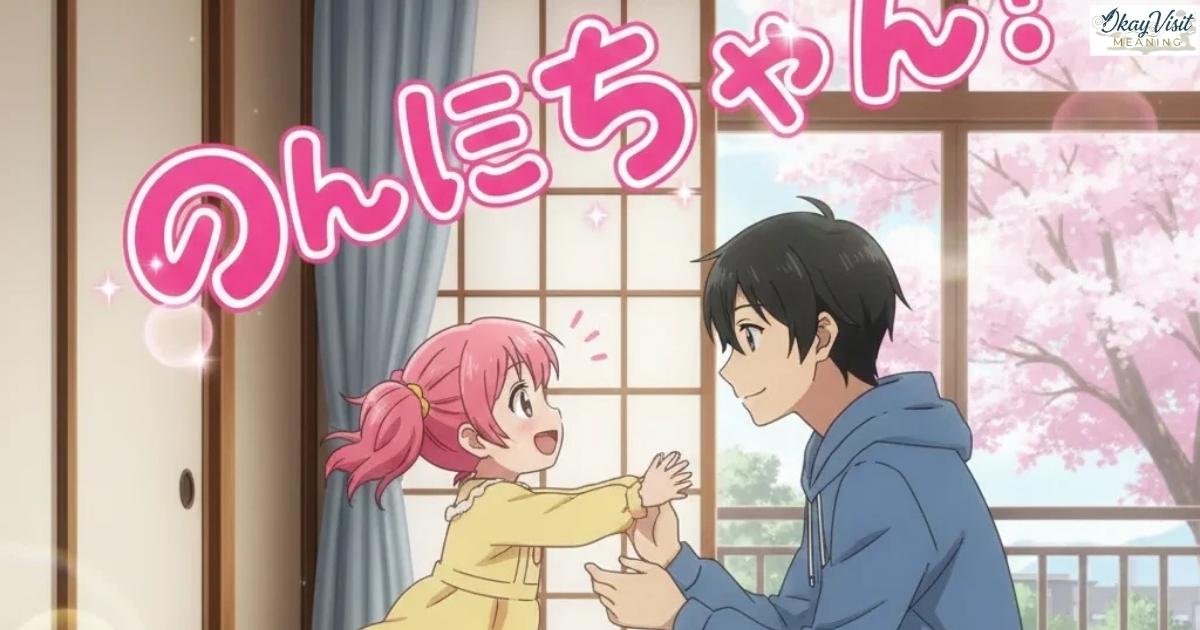
If you’ve ever heard “Onii-chan” and assumed it only translates to “big brother,” there’s a little more to the story. This familiar Japanese expression carries meanings connected to language, family, culture, affection, and anime, which can make it confusing for people encountering it outside Japan.
In its original sense, Onii-chan (お兄ちゃん) is an affectionate way to address or talk about an older brother. It expresses familiarity, closeness, warmth, and affection rather than simply identifying someone as a sibling. However, the expression has gained additional associations through anime, manga, games, TikTok, memes, and online fandoms.
If you first came across Onii-chan in an anime, meme, social media post, game, or online discussion, the surrounding context matters. This guide covers the Onii-chan meaning, pronunciation, history, cultural use, anime connections, common misunderstandings, examples, related expressions, and why its meaning can seem different depending on where you encounter it.
What Does Onii Chan Mean?
Onii-chan (お兄ちゃん) means “older brother” in Japanese, with a warm, affectionate, and familiar tone.
The expression can be understood in two parts:
- Onii (お兄) = older brother
- Chan (ちゃん) = an affectionate, informal honorific used with people someone feels close to
Together, Onii-chan is often translated as “big brother,” “big bro,” or “dear big brother.” It sounds much more affectionate than a formal way of referring to an older brother.
In its normal Japanese use, it is a family expression, not a romantic term. A younger sibling may naturally use it when speaking to an older brother.
At the same time, anime and internet culture have introduced other associations with the expression. Certain online communities and adult-oriented anime genres have given the word meanings or connotations that aren’t part of its ordinary everyday use. These distinctions are important when interpreting the term.
What Does Onii Chan Mean in English?
The closest English translations of Onii-chan are:
“Big brother” or “big bro,” said affectionately.
English doesn’t have an exact equivalent for the emotional feeling created by the Japanese “-chan” suffix. The ending can add a sense of tenderness, familiarity, and cuteness.
For that reason, “big bro” can sometimes capture the casual feeling, although it still doesn’t completely reproduce the Japanese nuance.
When English speakers use onii-chan, they generally do so because of anime, Japanese culture, fandoms, memes, or online conversations. It may be used seriously when discussing Japanese language or playfully as an anime-inspired expression.
What Does Onii Chan Mean in Japanese?
In Japanese, Onii-chan (お兄ちゃん) is a familiar and affectionate way to say “older brother.”
The Japanese form is:
お兄ちゃん
It can be broken down as:
- お (o) = an honorific prefix that adds politeness or softness
- 兄 (nii) = older brother
- ちゃん (chan) = affectionate and familiar honorific suffix
Pronunciation
Oh-NEE-chan
The “ii” in onii is pronounced with a long “ee” sound.
In everyday Japanese, using “-chan” with someone close to you creates a warm and familiar feeling. Younger children may naturally use onii-chan when talking to their older brothers.
What Does Onii Mean in Japanese?
Onii (お兄) relates to the Japanese word for older brother and is the honorific form associated with ani (兄).
The “o” prefix adds an honorific element. In everyday speech, onii generally appears with another suffix such as -chan, -san, or -sama rather than being used completely by itself.
One important spelling distinction is the difference between:
- Onii (お兄) = older brother
- Oni (鬼) = demon or ogre in Japanese folklore
The extra “i” matters. Therefore, onii-chan and oni-chan are technically different spellings, even though internet users sometimes leave out one of the letters.
Onii-San Meaning — What’s the Difference?
Onii-chan and onii-san both relate to an older brother, but their levels of familiarity are different.
| WordHonorificFeelingWhen Used | |||
|---|---|---|---|
| Onii-chan (お兄ちゃん) | -chan | Cute, warm, affectionate | Close family, young children |
| Onii-san (お兄さん) | -san | Polite, neutral, respectful | Family and also strangers |
| Onii-sama (お兄様) | -sama | Very formal, dramatic | Formal settings, anime |
Onii-san is more neutral and respectful than onii-chan. A younger sibling may use it with an older brother, while people can also use onii-san when referring to or addressing another person’s older brother. It can even be used for an unfamiliar older male in some situations.
Onii-sama is much more formal. It is uncommon in ordinary family conversation but appears frequently in anime, particularly when a character is meant to sound refined, dramatic, respectful, or emotionally intense.
What Does Onii Chan Mean for a Girl / From a Girl?
People who search “what does onii chan mean for a girl” or “what does onii chan mean from a girl” may be asking about two different situations.
1. If a girl says onii-chan — what does it mean?
Usually, she is addressing or referring to her older brother in an affectionate way. Younger sisters using onii-chan is a familiar and natural use of the expression.
2. If someone calls a girl “onii-chan” — what does it mean?
That would not normally be correct because onii-chan refers to a male older sibling. If someone uses it for a girl, it could be a joke, an intentional mistake, or a specific reference within a community.
The corresponding affectionate term for an older sister is:
Onee-chan (お姉ちゃん) = big sister.
In short, girls can certainly say “onii-chan” to their older brothers, but the term itself refers to a male older sibling.
What Does Onii Chan Mean Sexually?
In its original Japanese usage, Onii-chan does not have a sexual meaning. It is simply an affectionate family expression for an older brother.
However, people may encounter the term in certain anime genres and adult content, including hentai and ecchi-related material. In some of these works, characters use sibling terminology in romantic or sexual storylines. As a result, the word has developed a secondary association within parts of internet and anime culture.
This distinction is important: the sexual association comes from specific fictional genres and online communities, not from the ordinary Japanese meaning of onii-chan.
Why Is Onii-Chan Sexualized?
The sexualized association surrounding onii-chan developed through particular areas of anime and internet culture.
1. The imouto (younger sister) genre in anime
Japanese anime and manga include a recognizable imouto or younger-sister character genre. Some works, particularly adult-rated productions, portray romantic or sexual situations involving characters who are presented as siblings or use sibling-style language.
2. The “forbidden” framing
Some of these stories rely on taboo relationships as part of their fictional premise. Because onii-chan is strongly associated with an older-brother/younger-sister relationship, the term can become a recognizable signal of that type of fictional scenario.
3. International spread through memes and clips
Anime clips and memes often travel far beyond their original context. People unfamiliar with Japanese may first encounter onii-chan through suggestive or humorous online clips rather than ordinary Japanese family scenes.
4. The reality vs. the meme
In everyday Japan, onii-chan is simply a familiar word for an older brother. The sexualized association comes from particular anime genres and internet communities rather than Japanese family life in general.
What Does Onii Chan Mean in Anime?
In anime, onii-chan appears in many different genres. It can be found in family stories, comedy, action series, drama, romance, and other types of shows.
When a younger sibling says onii-chan, viewers immediately understand that the character is referring to an older brother and that the relationship is usually close or familiar.
Common anime uses of onii-chan:
Sweet family moments:
“Onii-chan, you’re finally home!” — a younger sister happily greeting her brother.
Dramatic emotional scenes:
“Onii-chaaan!” — an exaggerated or emotional call during a tense scene.
Comedy and exaggeration:
“Onii-chan no baka! You ate my pudding again!” — playful sibling arguing.
Character development:
A change from “onii-san” to “onii-chan” can suggest that characters have become more familiar or emotionally close.
Adult-oriented anime:
In some adult genres, the word appears in romantic or suggestive storylines involving sibling-coded characters. This is the source of much of its sexualized online association.
Onii-Chan Anime Girl — Common Tropes Explained
The search term “onii-chan anime girl” commonly points to the familiar anime archetype of a younger sister, or imouto character, who calls her older brother onii-chan.
This character dynamic often includes recognizable features:
- High-pitched, enthusiastic voice when saying “onii-chan”
- Strong attachment to an older brother, sometimes portrayed as protective or possessive
- Personality contrast between an energetic younger sister and a calmer older brother
- Comedic interactions involving teasing, arguments, or exaggerated reactions
The trope appears throughout anime and has become recognizable enough to be parodied as well as used sincerely.
In wholesome family-focused anime, the relationship can simply show sibling affection. In adult-oriented genres, the same setup may be presented differently, which contributes to the separate online associations surrounding the term.
What Does Onii Chan Mean in Hentai?
In hentai, onii-chan may be used by a younger female character when addressing an older male character, particularly in stories involving sibling or sibling-like relationships.
The literal meaning of the word remains “big brother.” The difference is the adult context in which the term appears.
This is a genre-specific use and should not be confused with the normal Japanese meaning. In everyday Japanese life, younger siblings can use onii-chan without any sexual implication.
If someone’s first exposure to the expression came from hentai or another adult anime genre, they may incorrectly assume that this is the primary meaning. It isn’t. The ordinary meaning is simply older brother.
What Does Onii Chan Mean in Korean?
Onii-chan is Japanese, not Korean.
Korean has its own words for an older brother, including:
- 오빠 (Oppa) — commonly used by a girl for her older brother and also used for certain older male relationships
- 형 (Hyeong) — commonly used by a boy when addressing his older brother
These expressions aren’t interchangeable. Onii-chan belongs to Japanese, while oppa and hyeong belong to Korean.
Because anime is popular in South Korea, Korean fans may know and use onii-chan in anime communities, but they still recognize it as a Japanese expression.
What Does Onii Chan Mean in Chinese?
Onii-chan is also not a Chinese expression. It is Japanese.
In Mandarin Chinese, common words for an older brother include:
- 哥哥 (Gēgē) — the common term for older brother
- 哥 (Gē) — a shorter and more casual form
Japanese and Chinese share some written characters, but their languages, pronunciations, and grammar are different.
The character 兄, which appears in onii-chan, also exists in Chinese, but it is pronounced differently. In Mandarin it is associated with xiōng, while Japanese uses readings such as nii and ani.
Chinese-speaking anime fans may recognize onii-chan, but it remains a Japanese word.
What Does Onii Chan Mean in Spanish?
Onii-chan has no Spanish origin or native Spanish meaning. It is a Japanese expression.
The usual Spanish way to say “older brother” is:
Hermano mayor = older brother.
Depending on the situation, people may simply say hermano or use informal expressions such as bro.
There isn’t one Spanish word that perfectly reproduces the affectionate and honorific feeling of onii-chan.
Spanish-speaking anime fans, particularly throughout Latin America, may still use onii-chan because of the popularity of Japanese anime. In that case, they are using the Japanese expression rather than a Spanish word.
What Does Onii Chan Mean in Japan (Real Life)?
This is one of the most important points to remember.
In everyday Japanese life, onii-chan is an ordinary family expression. Younger siblings, particularly younger children, may use it when speaking to an older brother.
It doesn’t automatically carry the meme, anime, or sexual associations that people outside Japan may attach to it.
Japanese children can naturally grow up using the word at home. It may also appear in children’s media, family-oriented stories, and ordinary conversations.
So if someone hears a child say “onii-chan” in a Japanese household, the normal interpretation is simply “big brother.”
The more unusual meanings people associate with the term largely come from anime genres, memes, and international internet culture.
Onii Chan Yamete Kudasai Meaning
“Yamete kudasai” (やめてください) means “please stop” in Japanese.
Therefore:
“Onii-chan yamete kudasai” = “Please stop, big brother.”
The expression appears in anime dialogue and has also become an internet meme. It is especially associated online with adult anime contexts, which is why many people encounter the phrase while searching for its meaning.
However, yamete kudasai itself is a normal Japanese phrase. It can simply be used to politely ask someone to stop doing something.
Onii Chan Daisuki Meaning
“Daisuki” (大好き) means “I really like you” or, depending on context, “I love you very much.”
Therefore:
“Onii-chan daisuki” = “I love you so much, big brother.”
In a normal family setting, this can express strong affection from a younger sibling toward an older brother.
Anime may use the expression during emotional, cute, or affectionate scenes between sibling characters.
Other Onii Chan Phrases Explained
Ohayo Onii-Chan
“Ohayo” (おはよう) means “good morning.”
Therefore:
“Ohayo onii-chan” = “Good morning, big brother.”
It is a cheerful greeting and is frequently heard in anime-style dialogue.
Ohio Onii-Chan
“Ohio onii-chan” is an internet joke based on the similarity between Ohio, the U.S. state, and ohayo, the Japanese word for “good morning.”
Anime fans may use the phrase for humor. It doesn’t create a new Japanese meaning.
Arigato Onii-Chan
“Arigato” (ありがとう) means “thank you.”
Therefore:
“Arigato onii-chan” = “Thank you, big brother.”
It is a straightforward way to express appreciation.
Sayonara Onii-Chan
“Sayonara” (さようなら) means “goodbye.” It can sometimes have a more final or emotional feeling than a casual farewell.
Therefore:
“Sayonara onii-chan” = “Goodbye, big brother.”
The phrase is often associated with emotional or dramatic anime farewells.
Onii-Chan No Baka / Onii-Chan Baka
“Baka” (バカ) can mean “dummy,” “fool,” or “idiot,” depending on context and tone.
Therefore:
“Onii-chan no baka!” can be understood as “You’re such a dummy, big brother!”
In anime sibling interactions, it is often playful teasing rather than a serious insult.
Onii-Chan Daisuki
As explained above, “Onii-chan daisuki” expresses strong affection toward an older brother and can be translated as “I love you so much, big brother.”
Ara Ara Onii-Chan
“Ara ara” (あらあら) can express something like “Oh my” or “Well, well.”
It is often portrayed in anime as a teasing, knowing, or mildly surprised expression. “Ara ara onii-chan” has also become an internet expression among anime fans and is often used playfully.
UWU Onii-Chan
UWU is an internet emoticon associated with cuteness, affection, and a soft or playful tone.
“UWU onii-chan” combines online cute-speak with anime culture. It isn’t a standard Japanese expression.
Onii-Chan Chan
“Onii-chan chan” is not a standard Japanese phrase. Online, it may simply be playful repetition, a joke, or a nickname associated with a particular character or community.
Full Japanese Honorifics & Family Words Table
| Japanese WordMeaningFeeling / Usage | ||
|---|---|---|
| Onii-chan (お兄ちゃん) | Older brother (affectionate) | Warm, cute, close family |
| Onii-san (お兄さん) | Older brother (polite) | Neutral, respectful |
| Onii-sama (お兄様) | Older brother (very formal) | Dramatic, formal, anime |
| Onee-chan (お姉ちゃん) | Older sister (affectionate) | Warm, cute, close family |
| Onee-san (お姉さん) | Older sister (polite) | Neutral, respectful |
| Onee-sama (お姉様) | Older sister (very formal) | Dramatic, formal, anime |
| Nii-chan (にいちゃん) | Big bro (casual short) | Very casual, informal |
| Nee-chan (ねえちゃん) | Big sis (casual short) | Very casual, informal |
| Otouto (弟) | Younger brother | Family |
| Imouto (妹) | Younger sister | Family |
| Senpai (先輩) | Senior / upperclassman | School, work |
| Kouhai (後輩) | Junior / underclassman | School, work |
| Baka (バカ) | Dummy / fool (playful) | Teasing |
| Daisuki (大好き) | I love you / I really like | Affection |
| Arigato (ありがとう) | Thank you | Gratitude |
| Ohayo (おはよう) | Good morning | Morning greeting |
| Sayonara (さようなら) | Goodbye (final) | Farewell |
| Yamete (やめて) | Stop it | Request to stop |
| Ara ara (あらあら) | Oh my / Well, well | Teasing, surprise |
Common Spelling Variations
People spell onii-chan in several ways when writing it with the Latin alphabet. These variations generally point to the same Japanese expression:
- Onii-chan — standard romanized form
- Onii chan — without the hyphen
- Oniichan — written as one word
- Oni chan — simplified spelling with one fewer “i”
- Onichan — shortened informal spelling
- Onii-chan~ — tilde added online to create a softer or playful tone
The clearest romanization is onii-chan, including the hyphen and double i.
The double i is significant because onii and oni refer to different Japanese words:
Onii (お兄) = older brother
Oni (鬼) = demon/ogre
How to Use Onii Chan Correctly (and When NOT To)
When It’s Perfectly Fine
- Discussing anime, manga, or Japanese culture
- Using the expression playfully with friends who understand anime culture
- Creating fan fiction or other Japanese-inspired fan content
- Learning Japanese vocabulary and honorifics
- Referring to an appropriate anime or internet meme
When to Be Careful
- Don’t casually call a Japanese person you barely know onii-chan. In real Japan, using it toward someone else’s older brother or an unfamiliar person can sound overly familiar.
- Don’t assume the sexualized anime meaning is the normal Japanese meaning.
- Don’t remove the second “i” if you specifically want to write the standard romanized form for “big brother.”
What It Does NOT Mean
- It isn’t inherently a romantic term in ordinary Japanese culture.
- It doesn’t mean boyfriend or romantic partner.
- It isn’t Korean; oppa is Korean.
- It isn’t Chinese; gēgē is Chinese.
- It isn’t a native Spanish or English word.
FAQ’s
What does onii chan mean?
Onii-chan means “older brother” in Japanese and has an affectionate, familiar tone. It is commonly used by a younger sibling when addressing an older brother.
What does onii chan mean in English?
The closest English equivalents are “big brother” and “big bro.” The Japanese suffix -chan adds a level of affection and familiarity that doesn’t translate perfectly into English.
What does onii chan mean in Japanese?
In Japanese, onii-chan (お兄ちゃん) is a normal affectionate term for an older brother. It combines onii, relating to older brother, with the affectionate -chan suffix.
What does onii chan mean sexually?
The expression itself has no inherently sexual meaning in everyday Japanese. However, some adult-oriented anime and manga use the term in romantic or sexual fictional scenarios involving sibling-coded characters. This has created a separate online association.
Why is onii-chan sexualized?
The association largely comes from the imouto or younger-sister genre and adult anime or manga that portray taboo sibling relationship scenarios. Clips, memes, and discussions from these genres then spread internationally, causing some people to associate onii-chan with adult content despite its ordinary meaning being simply “big brother.”
What does onii chan mean in Korean?
Onii-chan is Japanese, not Korean. A common Korean term used by a girl for an older brother is 오빠 (oppa). Korean anime fans may use onii-chan when discussing Japanese anime, but the word remains Japanese.
What does onii chan mean in Chinese?
Onii-chan is Japanese rather than Chinese. In Mandarin, 哥哥 (Gēgē) is a common term for older brother. Chinese anime fans may recognize onii-chan, but it remains a Japanese expression.
What does onii chan mean in anime?
In anime, onii-chan is commonly used by a younger sibling, particularly a younger sister, when addressing an older brother. It usually communicates familiarity and affection. Some adult-oriented genres use the expression in a different fictional context.
What does onii chan mean for a girl?
When a girl says “onii-chan,” she is usually affectionately addressing her older brother. This is one of the most natural uses of the expression in Japanese.
Onii-san meaning — how is it different from onii-chan?
Onii-san is more neutral and respectful, while onii-chan sounds warmer, cuter, and more familiar. The difference comes from the honorific suffixes -san and -chan.
What does onii chan mean in hentai?
In hentai, onii-chan may appear when a younger female character addresses an older male character in an adult storyline involving sibling or sibling-like relationships. The word itself still literally refers to an older brother; the adult meaning comes from the fictional context.
Onii chan yamete kudasai meaning?
Yamete kudasai means “please stop.” Therefore, “Onii-chan yamete kudasai” translates as “Please stop, big brother.” The phrase became well known online through anime and memes.
Onii chan daisuki meaning?
Daisuki means “I really like you” or “I love you very much,” depending on context. Therefore, “Onii-chan daisuki” means “I love you so much, big brother.”
What does onii mean in Japanese?
Onii (お兄) relates to older brother in Japanese and is the honorific form associated with ani. In normal speech, it commonly appears together with a suffix such as -chan, -san, or -sama.
What is the girl version of onii-chan?
The corresponding term for an older sister is onee-chan (お姉ちゃん). It means “big sister” in an affectionate way. Onii-chan refers to an older brother, while onee-chan refers to an older sister.
Conclusion
Onii-chan means “big brother” in Japanese, particularly when said in a warm, affectionate, and familiar manner. Although the word has gained additional associations through anime, memes, fandoms, and certain adult genres, those associations shouldn’t replace its ordinary Japanese meaning.
In real Japanese family life, onii-chan is a natural way for a younger sibling to address an older brother. The word becomes more complicated when it moves into international anime and internet culture, where its use can be humorous, exaggerated, or connected to fictional adult themes.
Understanding the difference between everyday Japanese usage and online or anime-specific interpretations makes the expression much easier to understand. Whether you’re studying Japanese, watching anime, researching a meme, or simply wondering about a phrase you encountered online, you now have a clearer picture of what onii-chan means and why its interpretation can change with context. And if you have an older brother, you can now explain the meaning to him — although the baka probably already knows.
